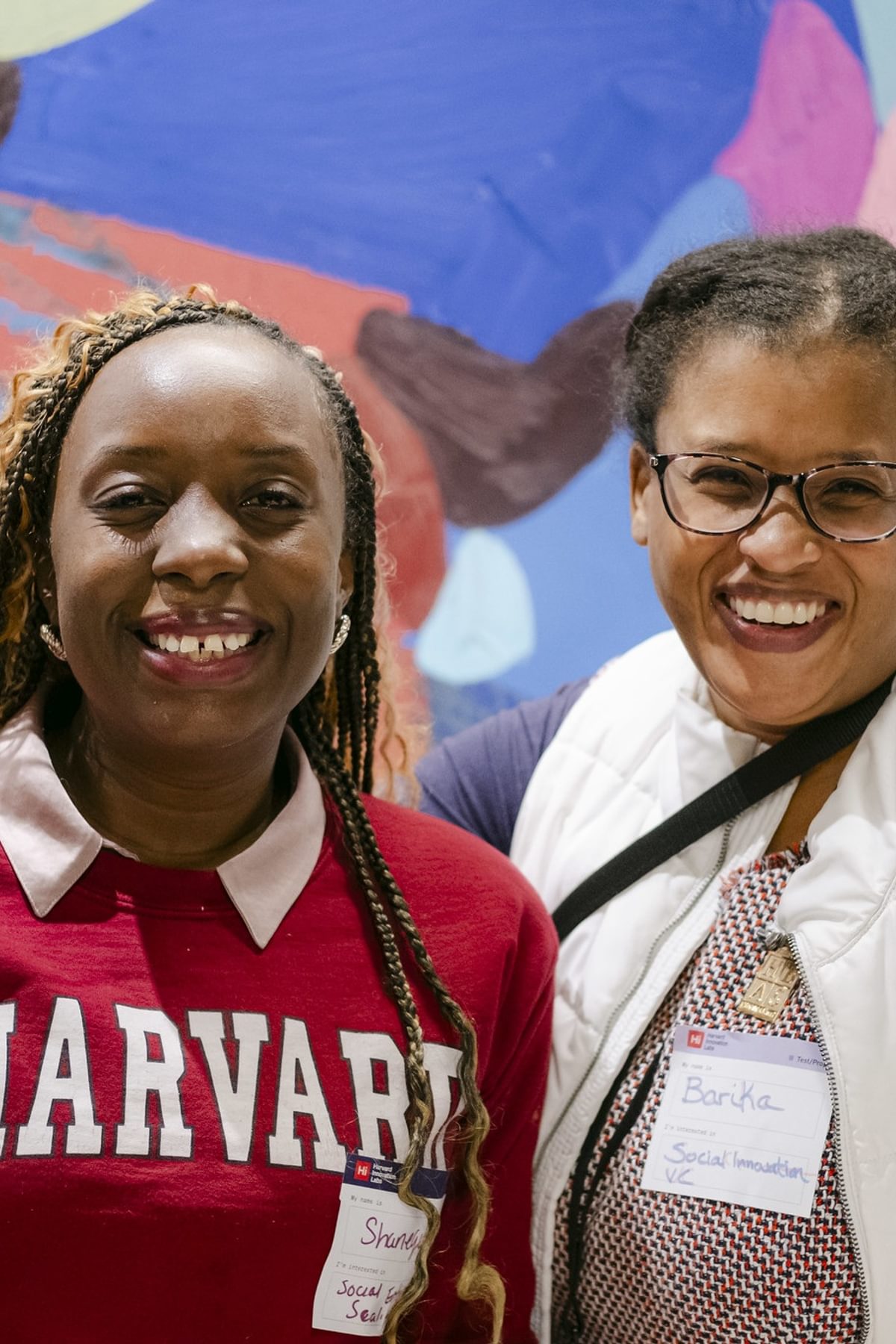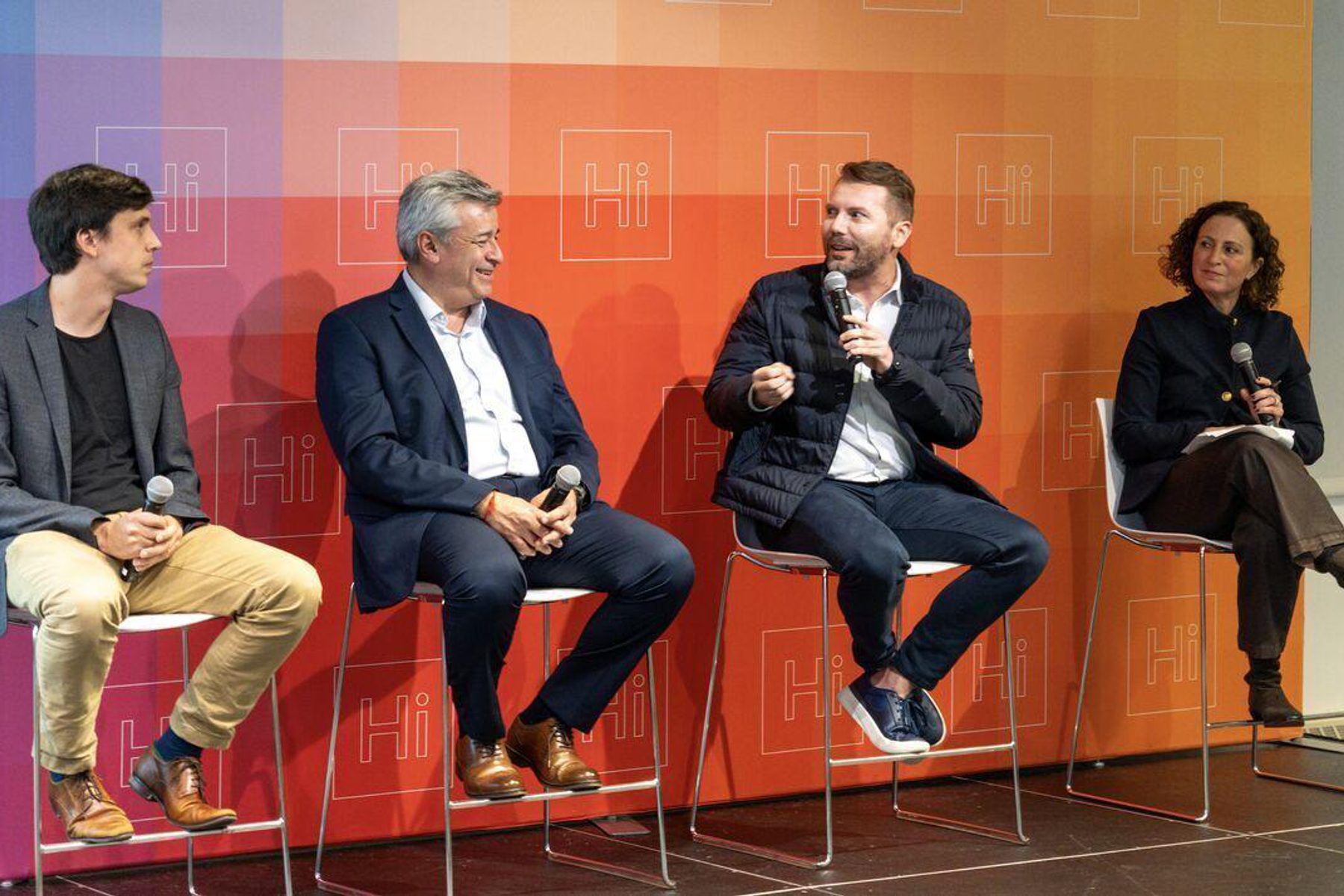
In celebration of Hispanic Heritage Month, the Harvard Innovation Labs recently hosted two dynamic conversations exploring the entrepreneurial landscape across Latin America. One focused on building and scaling ventures, and the other on funding growth. Together, they offered a candid look at how founders, investors, and corporate leaders are shaping innovation in a region defined by extraordinary talent, deep structural challenges, and boundless opportunity.
Moderated by Jill Kravetz, Bruce and Bridgitt Evans Executive Director of the Harvard Innovation Labs, and Rym Baouendi (HKS '22), the i-lab's director of alumni engagement, the panels brought together voices from across the startup ecosystem including:
- Polo Cedillo, former CEO, Grupo Proeza, and 2026 Harvard ALI Fellow
- Marcus Stromeyer HBS '24, co-founder and CEO, FieldData, and Harvard Launch Lab X founder
- Sergio Chaverri, founding partner, Latin American Chapter, IANUA Market Limited, and CEO, AYA Capital
- Rafa de Haro, co-founder and managing partner, COMETA
- Senofer Mendoza, co-founder/GP, Mendoza Ventures
- Amit Khosla, executive director, AYA Capital
From founders who are digitizing agriculture in Argentina, Brazil, and other LATAM countries to investors who are bridging Boston and Mexico City, participants shared lessons on scaling with purpose, building cross-border capital bridges, and fostering ecosystems that reward collaboration over competition.

Latin America’s biggest opportunities lie in solving its toughest problems.
Entrepreneurs across both panels agreed: Latin America’s challenges are fertile ground for innovation.
Marcus Stromeyer, HBS’24, a founder in the i-lab's Launch Lab X alumni accelerator, is building FieldData, an AI-powered farm management platform for producers across Latin America. Stromeyer described FieldData’s origins in agricultural inefficiency: “The cowboys on horseback are geniuses—they wake up at five to care for the land and animals, but they don’t come home to do data entry. That’s where we saw an opportunity for AI.” With his solution, workers submit data via WhatsApp messages, replacing pen-and-paper forms and disorganized chats, and supervisors analyze this data through FieldData’s web platform, with AI turning messages into structured insights.
Rafa de Haro added that these kinds of systemic challenges translate directly into business potential: “Structural problems tend to become huge opportunities. Now that the talent is there, the lack of capital represents a massive opening.”
Talent is abundant, but capital and collaboration remain the bottlenecks.
Polo Cedillo
emphasized that startups thrive when they partner with corporations rather than compete: “It’s very difficult for a startup to play with corporations. So we created a ‘playground’—inviting startups to test solutions with our assets. If it worked, we invested and helped them grow.”
Amit Khosla echoed this from an investor’s perspective: “There’s really good talent out there and not enough money, so you cherry-pick great deals when you can find them.”
Family offices are becoming vital bridge builders.
Across both panels, family offices emerged as key players in Latin America’s funding ecosystem—providing patient capital, regional expertise, and empathy for founders.
Sergio Chaverri shared: “Family offices are often the only investors in the region who understand both sides of the table—they’ve built businesses and know the grind.”
Senofer Mendoza agreed: “Family offices are the best bridge builders because they sit in funds, companies, and operating businesses. They just like good business, and they open doors traditional VCs can’t.”
Rafa de Haro noted that in COMETA’s funds, “the value from family office LPs to portfolio companies is second to none—they’re still operators, so they’re empathetic and hands-on.”
Founders must diversify their funding networks—locally and globally.
Speakers encouraged entrepreneurs to combine local capital relationships with global investor connections. De Haro cautioned that foreign “tourist capital” can vanish as fast as it arrives: “Nurture local relationships. You need partners who understand regulation and stay with you through cycles.”
Mendoza recommended a mix of perspectives: “Family investors are great at blitz-scaling; Boston investors are great at diligence; international investors keep you revenue-forward. That mix keeps you honest.”
Khosla added: “Be transparent about your journey and build VC relationships early—even if you’re too early for funding now.”
Emerging markets are the new testing ground for global innovation.
Both founders and investors emphasized that Latin America offers unique opportunities to test, scale, and export innovation.
Chaverri advised founders to “leverage where you’re from—but think bigger than your country. Emerging-market strategies are powerful when you expand to places with similar challenges, like Africa.”
Mendoza drew a parallel to Southeast Asia’s tech leap: “In Mexico, we’ll see a leapfrog moment—an entire generation connecting for the first time without legacy tech debt. It’s going to be beautiful.”
De Haro pointed to a new generation of companies “building infrastructure for financial services and organizing unstructured data so AI can actually work.”
Resilience, humility, and leveraging the ecosystem are keys to long-term success.
From startup grit to scaling operations, every speaker returned to one theme: resilience.
Cedillo summed it up like this: “Startups never die of hunger—they die of indigestion. Be humble enough to collaborate, find the right partners, and play the ecosystem.”
Mendoza offered this pragmatic encouragement to early-stage founders at Harvard: “You’re in one of the most fundable three square miles on the planet. Audit your tools—classes, mentors, alumni—and use them. Start here at Harvard; it works.”
From Mexico to Boston and beyond, Latin America’s startup story is one of creative problem-solving, shared opportunity, and cross-border collaboration. As these panels made clear, the future of LATAM innovation won’t be built by founders or investors alone. Instead, it will be shaped by the bridges they build between them.